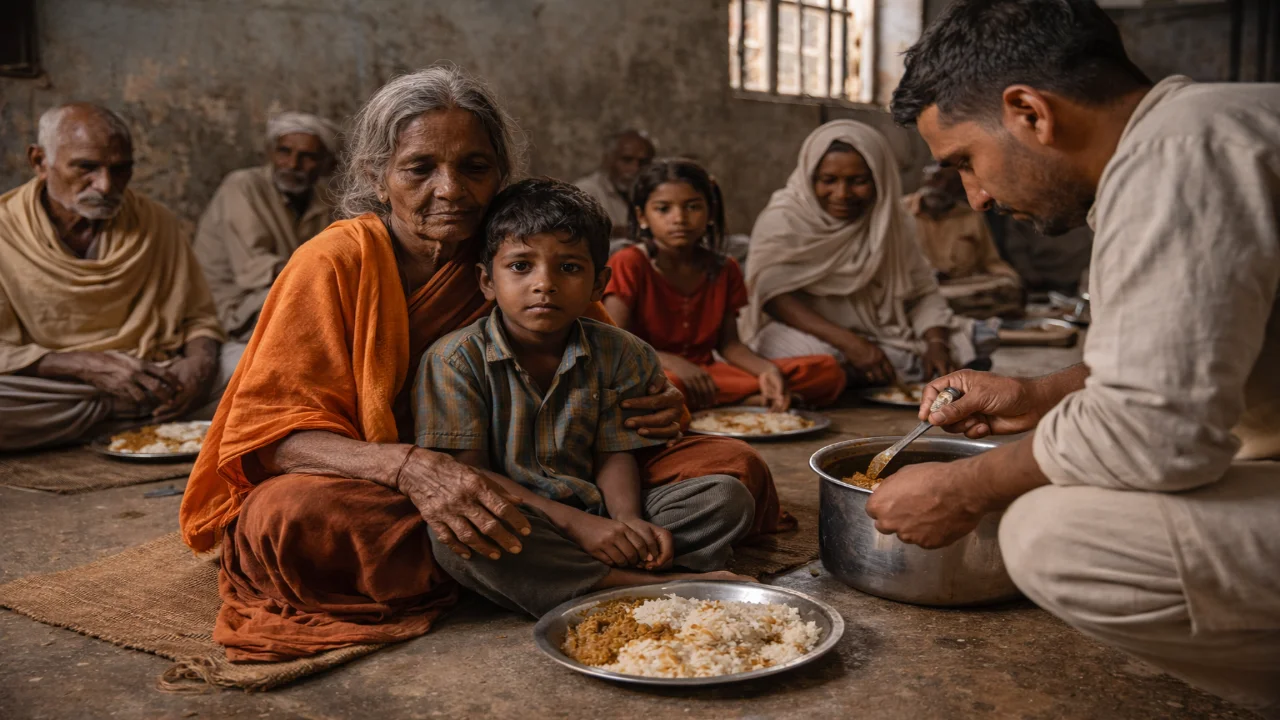
For someone who has lost family support, shelter alone does not solve the problem of survival. A roof can protect from rain and heat, but it cannot replace care, stability, or dignity. Across the country, orphaned and abandoned individuals often move from place to place, dependent on temporary help, uncertain meals, and fragile emotional support.
This is where the idea of care homes and anath ashrams becomes crucial. Their role goes far beyond providing physical shelter. They serve as spaces where safety meets routine, where food is assured, and where human connection begins to rebuild what loss and neglect have taken away.
One of the most immediate challenges faced by vulnerable individuals is hunger. Irregular meals affect not just physical health, but mental well-being. Constant uncertainty about food leads to anxiety, weakness, and long-term health issues. Ensuring regular, nutritious meals restores more than strength — it restores a sense of normalcy and dignity.
At Arthashila Foundation, support for anath ashrams focuses on consistency. Daily meals, clean living conditions, and basic healthcare are treated as non-negotiable needs, not optional services. Many residents arrive malnourished, emotionally withdrawn, or suffering from untreated health issues. Care, therefore, must be patient and sustained.
Clean environments and hygiene play a silent but powerful role in recovery. Regular cleaning, safe water, and basic sanitation prevent illness and promote well-being. These simple practices create an atmosphere where people feel respected rather than neglected.
Equally important is emotional care. For those who have experienced abandonment, trust does not return easily. A stable environment, familiar faces, and gentle guidance help rebuild confidence over time. Human connection — listening, reassurance, presence — becomes as important as food and shelter.
True care is not measured by the size of a building or the number of beds. It is measured by how consistently needs are met, how respectfully lives are treated, and how deeply dignity is protected. Shelter becomes meaningful only when it is combined with nourishment, empathy, and responsibility.
Supporting care homes is not about temporary relief. It is about standing beside lives that require long-term commitment. When society chooses care over neglect, survival turns into stability, and stability creates the possibility of healing.